Uganda, historically celebrated as the "Pearl of Africa," has evolved into one of the continent's most compelling destinations for global capital. As we navigate the nation's economic landscape, it is witnessing a historic transformation.
Driven by a projected GDP growth of 7% and the transition of the domestic oil sector from exploration to active production, the environment for those seeking
investment opportunities in Uganda has never been more fertile.
For the modern investor, whether a local entrepreneur, a member of the Uganda diaspora looking to build a legacy back home, or an international firm seeking high-yield frontiers, understanding exactly
where to invest money in Uganda is the critical first step toward significant wealth creation.
This guide provides an exhaustive, expert-level analysis of the best business ideas in Uganda, tailored to rank highly in search results by offering genuine, high-value insights for sophisticated investors.
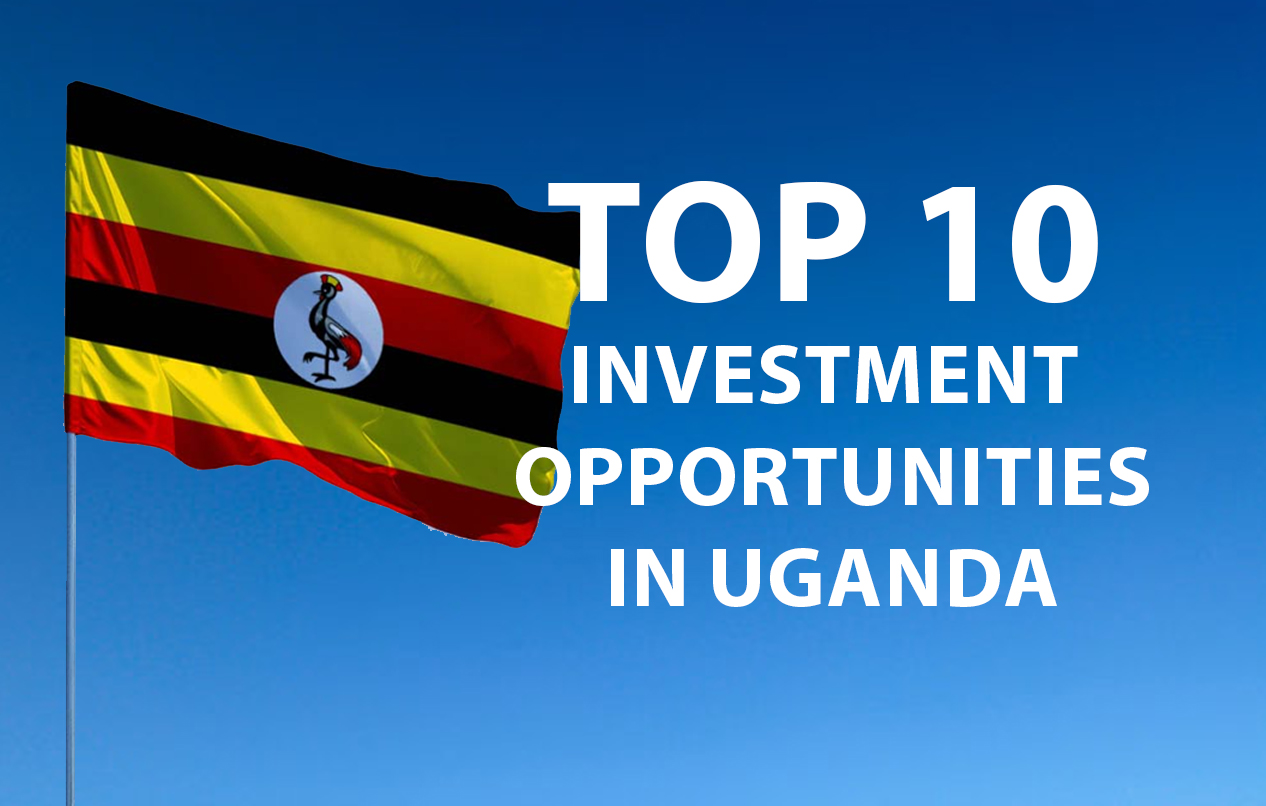
The following are the top 10 Investment opportunities in Uganda that one can easily consider
1. Commercial Agriculture: From Soil to Global Supermarket
Agriculture remains the backbone of the Ugandan economy, employing over 60% of the population and driving export earnings. However, a massive paradigm shift is underway. The real investment "gold mine" is no longer found in traditional subsistence farming but in high-tech agro-industrialization and the burgeoning agro-processing sector.
For those seeking the
best investment opportunities in Uganda, the transition from "growing" to "manufacturing" represents the highest ROI potential in the East African region.
The Industrialization of the Farm: A Value-Added Revolution
The Ugandan government, via the Uganda Investment Authority (UIA) and the National Development Plan IV (2025–2030), is aggressively subsidizing agricultural modernization. This strategic policy shift is designed to pivot the economy away from raw commodity exports toward higher-margin value-added products.
Savvy investors are now focusing on vertical integration within the following high-growth sectors:
- Coffee & Cocoa: Moving beyond raw beans into established investments in soluble coffee plants and premium chocolate manufacturing.
- Grains & Cereals: Transitioning from simple harvests to large-scale milling and fortification, capturing the domestic and regional food security market.
- Horticulture: Leveraging Uganda's organic branding to dominate the global supermarket shelves with processed exports.
Strategic Regional Focus: Tapping into Uganda’s Fertile Hubs
If you are searching for agricultural land for sale in Luero or the vast, fertile plains of Northern Uganda, the most profitable strategy is the "Nucleus Farming" model. This approach relies on a central commercial farm supported by robust outgrower schemes, ensuring a consistent, high-quality supply chain for downstream processing plants.
For investors researching how to start a fruit processing factory in Luwero, the location offers unparalleled logistical advantages. Its proximity to Kampala’s consumer markets and the Entebbe International Airport makes it a premier logistical hub for exporting:
- Certified Organic Juices
- Premium Dried Fruits
- Specialty Essential Oils
By targeting European and Middle Eastern markets, these agro-industrial investments capitalize on Uganda’s unique climate and the global demand for traceable, organic produce. As the nation moves toward a high-yield agricultural future, those who invest in processing infrastructure today will own tomorrow's supply chains.
Agribusiness Launchpad: We develop comprehensive feasibility studies for commercial farming and agro-processing plants.
Contact Our Lead Consultant: WhatsApp
+256782825945 | Email:
robertmwesige44@gmail.com
2. Real Estate & the Rise of Satellite Cities: Building Uganda’s Future
With one of the fastest-growing and youngest populations in the East African Community (EAC), Uganda's urban landscape is witnessing a historic transformation. The demand for affordable housing in
Uganda and modern commercial property has reached a fever pitch, creating a high-yield environment for visionary developers.
Urban Transformation and Industrial Warehousing
The Kampala real estate market is undergoing a radical diversification. While the previous decade focused on high-end luxury niches, it is the era of the "Satellite City" and specialized industrial warehousing. As the Namanve Industrial Park and regional hubs expand, a critical gap has emerged: the desperate need for sophisticated logistics centers and integrated employee housing.
Strategic investors are moving away from the congested city center toward peripheral areas such as Kira, Mukono, and Entebbe, where land values are appreciating rapidly. These satellite cities offer a "live-work-play" environment, providing a definitive solution to the urban sprawl while offering double-digit rental yields.
Solving the Housing Deficit through Innovation
Savvy investors are identifying high-ROI businesses in Uganda by addressing the sector's core challenge: the high cost of traditional building materials. For project managers and developers, the solution lies in localizing the supply chain.
By investing in local manufacturing of eco-friendly construction materials such as Interlocking Stabilized Soil Blocks (ISSB), precast concrete, and high-grade steel, developers can significantly reduce overheads while maintaining premium structural integrity.
This strategic shift toward "Green Building" and sustainable architecture does more than just lower costs; it unlocks access to international climate financing and green bonds. Building the future of
Uganda isn't just about brick and mortar; it's about leveraging technology and sustainability to provide high-quality, affordable residential units for the next generation.
Real Estate Strategy: Secure your property portfolio with
expert business plans and specialized market entry strategies.
Contact Our Lead Consultant: WhatsApp
+256782825945 | Email:
robertmwesige44@gmail.com
3. The Oil and Gas Value Chain: A Petrochemical Revolution
The landscape of East African energy has shifted. The
East African Crude Oil Pipeline (EACOP) is no longer a blueprint; it is a live, operational reality. The commencement of oil exports has catalyzed a multi-billion-dollar frontier, offering a
petrochemical revolution that extends far beyond the wellhead. For the strategic investor, the real value lies not just in the crude but in the sprawling value chain that supports it.
Dominating the Albertine Graben: Midstream & Downstream Alpha
While exploration in the
Albertine Graben continues to deliver strong returns for global energy giants, the "smart money" is pivoting toward midstream and downstream infrastructure.
Uganda is transitioning from a raw material exporter to an industrial energy hub, centered around two massive pillars:
- The Kabalega Petrochemical Industrial Park: A flagship project designed to house a refinery, an international airport, and various chemical industries.
- The Hoima Oil Refinery: This facility is the heartbeat of regional energy security, creating a massive vacuum for secondary services.
These hubs have triggered unprecedented demand for specialized logistics, hazardous-waste management, and Tier-1 hospitality services tailored to the growing population of expatriate engineers and technical consultants.
The Technical Investor’s Playbook: Solving the Skills Gap
To capitalize on these
investment opportunities in Uganda’s oil sector, firms must navigate the regulatory landscape with precision. A prerequisite for any participant is registration on the
Petroleum Authority of Uganda (PAU) National Supplier Database (NSD).
However, the most lucrative entry point is addressing a critical industry bottleneck: the
shortage of certified skilled labor.
The Solution: Investors establishing
specialized technical training centers fully certified to international benchmarks, such as OPITO, are entering a captive market. Because oil majors are legally mandated to prioritize
local content and human capital, high-standard
training facilities are not just a service; they are a mission-critical requirement for the entire industry. By bridging this gap, investors secure high-margin contracts while fulfilling mandatory local content requirements.
Energy Sector Compliance: Navigate the complex licensing and local content requirements of the oil and gas sector with our consulting team.
Contact Our Lead Consultant: WhatsApp
+256782825945 | Email:
robertmwesige44@gmail.com
4. Government Securities: The Safe Haven of Treasury Bonds and Bills
For the conservative investor prioritizing capital preservation, the most frequent question is: "Is it safe to invest in Uganda Treasury Bonds?" The answer remains a definitive yes. As a cornerstone of the Uganda Investment Authority (UIA) financial recommendations, government securities are backed by the full faith and credit of
the Republic of Uganda, offering a low-risk, high-yield sanctuary within the often-volatile East African Community (EAC) financial markets.
Competitive Yields and Real Interest Rates
Uganda continues to lead the region by offering some of the highest real interest rates for emerging-market investors. While global markets fluctuate, Uganda Treasury Bonds, specifically the long-dated 15-year and 20-year maturities, are currently yielding attractive coupons of 14.5% to 16.5%.
For those seeking short-term liquidity, Uganda Treasury Bills (91-, 182-, and 364-day tenors) offer a more flexible yet equally secure alternative. Compared with traditional savings accounts or fixed deposits, these securities offer a far superior, more reliable passive income stream in
Uganda, effectively hedging against local inflation.
Seamless Accessibility for the Diaspora
A significant shift in the investment landscape is the ease of
investing in Uganda Treasury Bonds from the diaspora. The
Bank of Uganda (BoU), in collaboration with commercial banks, has digitized the investment process.
Investors can now participate in the
Bank of Uganda auction calendar through:
- Mobile Banking & Dedicated Apps: Instant bidding and management of your CSD (Central Securities Depository) account.
- Secondary Market Trading: The ability to buy or sell existing bonds through licensed brokers or the Uganda Stock Exchange (USE).
- Custodial Services: Streamlined wealth management for high-net-worth individuals and institutional investors.
By allocating capital to government securities, you are not merely securing a high-yield investment opportunity; you are directly fueling national infrastructure development, including the expansion of the oil and gas sector and transport networks, making this a patriotic and profitable venture for every Ugandan abroad.
Investment Advisory: We provide market analysis and assistance in opening investment accounts for government securities.
Contact Our Lead Consultant: WhatsApp
+256782825945 | Email:
robertmwesige44@gmail.com
5. Fintech and the Digital Economy: Banking the Unbanked
With Information and Communication Technology (ICT) now contributing nearly 9% of the national GDP, Uganda’s digital revolution is no longer a prospect—it is a present-day goldmine. Fintech startups in
Uganda are at the vanguard of this transformation, positioning the country as a regional hub for financial innovation and digital inclusion.
The Evolution of the "Mobile-First" Frontier
Uganda has evolved far beyond basic mobile money transfers. We are witnessing a monumental shift toward sophisticated mobile money innovation and neo-banking. The landscape is rapidly expanding into specialized verticals where the next African "unicorns" are being forged:
- InsurTech: Digitizing insurance for the mass market.
- Micro-Pensions: Creating long-term security for the informal sector.
- Blockchain-Enabled Micro-Lending: Utilizing decentralized finance (DeFi) to provide instant liquidity to SMEs.
This transition from simple transactions to a comprehensive digital financial ecosystem represents one of Uganda's most profitable business opportunities.
The Strategic Advantage: Scalability and Low Overhead
Why is tech the ultimate play for the modern investor? The answer lies in the unparalleled scalability of digital assets. Unlike traditional brick-and-mortar industries, a single fintech platform built in Kampala can seamlessly serve millions of users across the entire East African Community (EAC) region with minimal incremental costs.
Investors are currently reaping significant rewards by solving the "trust gap" in the domestic market. By building robust escrow systems and integrated logistics platforms, innovative startups are bridging the gap between online orders and doorstep delivery.
Achieve Financial Freedom through Ugandan Tech
Investing in Uganda’s digital space is a high-yield strategy for those looking to capitalize on a young, tech-savvy population. By "banking the unbanked," you are not just funding a startup; you are investing in the infrastructure of a modern economy. For those seeking passive income streams and high-growth venture capital opportunities, the Ugandan fintech sector remains the most compelling entry point in East Africa today.
Tech Venture Support: Get your FinTech startup licensed and operational with our specialized company formation services.
Contact Our Lead Consultant: WhatsApp
+256782825945 | Email:
robertmwesige44@gmail.com
6. Renewable Energy: Powering a Green Recovery and Sustainable ROI
The Government of Uganda’s ambitious energy mandate to integrate an additional 1,600 MW into the national grid has catalyzed a surge in renewable energy investment. While
Uganda has historically leveraged the Nile for massive hydropower projects, the contemporary investment frontier is shifting toward decentralized, scalable, and high-yield sustainable energy solutions.
The Shift to Off-Grid Solar and Mini-Grids
In rural and peri-urban regions where the national grid remains cost-prohibitive, a massive, untapped market for off-grid solar solutions has emerged. This presents a lucrative entry point for companies specializing in Solar Home Systems (SHS) and mini-grid infrastructure. Given Uganda’s high solar irradiation, these projects deliver reliable returns while addressing the energy gap for millions of consumers and small-scale commercial enterprises.
Industrial Biomass and Clean Energy for Manufacturing
As
Uganda undergoes a rapid industrial transformation, the manufacturing sector is demanding more efficient, cost-effective power. There is an urgent, high-density demand for industrial-scale solar installations and biomass energy solutions to power factories and processing plants. Investors in this space are not just selling power; they are providing the critical infrastructure required for Uganda’s value-added economy.
Attracting "Green Capital" through ESG Compliance
Beyond the local profit potential, renewable energy projects in
Uganda align perfectly with global Environmental, Social, and Governance (ESG) mandates. This strategic alignment makes it significantly easier for developers to unlock "green capital," access international climate grants, and attract impact-focused venture capital. By investing in Uganda's green recovery, you are positioning your portfolio at the intersection of emerging market growth and global sustainability leadership.
Energy Project Planning: We offer technical feasibility studies and regulatory guidance for renewable energy developers.
Contact Our Lead Consultant: WhatsApp
+256782825945 | Email:
robertmwesige44@gmail.com
7. Tourism: Luxury Eco-Lodges and the "Entebbe-Kidepo" Axis
Regularly headlined by National Geographic and Lonely Planet as a premier global destination, Uganda’s tourism sector is undergoing a sophisticated transformation. The industry is pivotally shifting toward a "High Value, Low Impact" model, targeting the world’s most affluent travelers. While investing in Jinja, the undisputed "Adrenaline Capital of East Africa continues to yield consistent returns, the most lucrative "Blue Ocean" opportunities have shifted toward the north and west.
The Rise of Ultra-Luxury Eco-Tourism
The investment landscape has been fundamentally altered by the strategic expansion of Uganda's aviation infrastructure. With the development of international-standard runways near Kidepo Valley National Park, this rugged, "hidden gem" of Africa is now directly accessible to elite global travelers and private charters.
There is currently a significant supply-demand gap for ultra-luxury eco-lodges and boutique resorts that can provide world-class amenities without compromising environmental integrity.
Why the "Entebbe-Kidepo" Axis is a Goldmine:
- The Blue Ocean Strategy: This niche offers high barriers to entry and minimal competition, allowing for premium pricing power and exceptional profit margins.
- Sustainability as a Luxury Asset: Modern investors can capitalize on the global trend of "Conscious Travel." Developing zero-carbon footprint resorts in the Northern Circuit offers a unique selling proposition (USP) that resonates with ESG-focused investment portfolios.
- The Northern Frontier: Kidepo is often cited as the most beautiful wilderness in Africa. Investing in the "Entebbe-Kidepo" axis enables capturing tourists seeking to bypass long drives in favor of exclusive, fly-in safari experiences.
- Untapped Potential: Beyond traditional safaris, opportunities exist for high-end wellness retreats, photographic tourism hubs, and cultural immersion experiences that leverage Uganda's rich heritage.
For the savvy investor, the current window represents a first-mover advantage. As the
Uganda Investment Authority (UIA) continues to offer tax incentives for tourism infrastructure, the transition from "rugged adventure" to "exclusive luxury" stands as one of the most stable and high-yield
investment opportunities in the
East African Community (EAC) market.
Hospitality Development: Launch your tourism venture with a bankable business plan and professional licensing support.
Contact Our Lead Consultant: WhatsApp
+256782825945 | Email:
robertmwesige44@gmail.com
8. Mineral Development: From Raw Ore to Refined Wealth
Uganda sits atop a geological goldmine, characterized by a diverse and largely untapped sub-surface wealth that includes world-class deposits of gold, rare earth elements (REEs), limestone, cobalt, lithium, and copper. For decades, the sector was defined by the extraction and export of low-value raw ores. However, the investment landscape has undergone a tectonic shift.
Under the government’s strictly enforced Value Addition and Beneficiation Policy, the era of "exporting raw rocks" has officially ended.
Uganda is repositioning itself as a sophisticated regional processing hub. This transition creates a high-barrier-to-entry but exceptionally high-reward environment for institutional investors and mining conglomerates ready to invest in infrastructure rather than just extraction.
The Strategic Smelting and Refining Opportunity
The actual "alpha" in Uganda's mining sector no longer lies in the pit, but in mid-stream and downstream processing. As global demand for "green minerals" (cobalt and copper for EVs) and "safe-haven assets" (gold) surges, Uganda offers the infrastructure and political will to process them locally.
- Gold Refining Hubs: With major resource corridors in Mubende and Busia, there is a massive opportunity to establish state-of-the-art smelting facilities. These hubs capture the significant price spread between "doré" bars and those with 99.9% refined purity, serving not just Ugandan miners but also the wider Great Lakes region.
- The Kilembe Copper Revival: The modernization of the historic Kilembe Copper Mines represents one of the most significant brownfield opportunities in East Africa. Integrating extraction with a local smelting plant enables investors to directly feed into the global electronics and renewable energy supply chains.
- Industrial Minerals & The Construction Boom: Beyond precious metals, Uganda’s vast limestone and iron ore deposits are the primary engines for the nation’s iron and steel industry. With an unprecedented infrastructure and real estate boom currently underway, the domestic demand for locally processed steel, cement, and glass is at an all-time high.
The Investment "Moat": Incentives and Partnerships
Navigating the regulatory framework of a sovereign mining sector requires a strategic approach. Uganda offers several mechanisms to de-risk your entry:
- The UDC Partnership Advantage: Investors can leverage strategic joint ventures with the Uganda Development Corporation (UDC). Such partnerships provide institutional backing, simplified land acquisition, and a "fast-track" through regulatory hurdles.
- Tax Alpha & Fiscal Incentives: Projects focused on domestic beneficiation qualify for comprehensive tax exemptions. This includes zero-rated VAT on exploration services and specialized mineral-sector incentives that significantly improve the Internal Rate of Return (IRR).
- ESG and Ethical Sourcing: By processing locally, investors can ensure a transparent, audited supply chain that meets international ESG (Environmental, Social, and Governance) standards, a requirement for modern global markets.
Expert Mining Advisory: Secure your stake in Uganda’s mineral wealth with a bankable feasibility study and professional company formation.
Contact Our Lead Consultant: WhatsApp
+256782825945 | Email:
robertmwesige44@gmail.com
9. Manufacturing and Import Substitution: The Industrial Frontier
Uganda is currently executing one of the most aggressive industrialization programs in Sub-Saharan Africa. The Uganda Investment Authority (UIA) has established more than 25 dedicated industrial and business parks, creating a "plug-and-play" environment for manufacturers. From the flagship Namanve Industrial and Business Park to the specialized Mbale Sino-Uganda Industrial Park, the infrastructure—including high-voltage power, high-speed fiber, and dedicated transport links—is ready for immediate deployment.
The Macro Play: Why Manufacture in Uganda Now?
The core of Uganda’s economic strategy is the Buy Uganda Build Uganda (BUBU) initiative. This is a deliberate import substitution strategy designed to pivot the economy from a consumer of expensive foreign goods to a regional production powerhouse.
By manufacturing locally, you are not merely entering a market; you are solving a national economic priority, which grants you a seat at the table for policy discussions and government procurement.
- A Captive Market of 345 Million: While Uganda offers a growing domestic market of 45 million people, its greatest strength is its location. As a member of the East African Community (EAC) and the Common Market for Eastern and Southern Africa (COMESA), a factory in Uganda enjoys duty-free, quota-free access to over 345 million consumers.
- High-Growth Industrial Niches: * Pharmaceuticals: Currently, over 80% of essential medicines are imported. Establishing local WHO-standard manufacturing plants for generics and vaccines is a high-impact, high-profit opportunity.
- Electronics & Assembly: As digital penetration grows, the demand for locally assembled smartphones, tablets, and home appliances is surging.
- Fast-Moving Consumer Goods (FMCG): From processed foods to personal care products, the rising middle class in Kampala and regional cities is demanding higher-quality, locally produced alternatives to imports.
The Fiscal "Moat": Unrivaled Incentives
To attract global capital, Uganda offers a "fiscal shield" that is among the most competitive in Africa. Investors within designated industrial parks can secure:
- A 10-Year Income Tax Holiday: Zero corporate income tax for a decade allows for rapid capital recovery and reinvestment.
- Zero-Rated Import Duty: Enjoy the duty-free importation of capital machinery, equipment, and raw materials required for production.
- Subsidized Industrial Utilities: Access to subsidized electricity rates (targeting $0.05 per kWh) and dedicated water infrastructure ensures your operational expenditures (OPEX) remain globally competitive.
- Export Incentives: For those looking beyond the EAC, manufacturing in Uganda provides favorable access to European and American markets through various trade agreements.
Education Investment Launchpad: From feasibility studies to
vocational school registration, we ensure your institution is industry-ready.
Contact Our Lead Consultant: WhatsApp
+256782825945 | Email:
robertmwesige44@gmail.com
10. Education and Specialized Vocational Training: Capitalizing on the Human Capital Gap
As Uganda pivots toward an industrial and oil-backed economy, a critical "bottleneck" has emerged: a profound shortage of specialized, industry-ready talent. This creates a massive opening for high-yield investment in
Education and Vocational Training. While the traditional academic sector is saturated, the market for "Technical and Vocational Education and Training" (TVET) is underserved and high-growth.
Bridging the Skills Gap: Where the Opportunity Lies
The modern Ugandan economy no longer requires generalists; it demands
specialists. Investors who establish world-class training centers focused on the following niches will find a captive market of corporate clients and ambitious youth:
- Oil and Gas Certifications: With the EACOP project in full swing, there is an insatiable demand for certified welders, pipefitters, and health and safety (HSE) officers. Training centers that offer internationally recognized certifications (such as OPITO or AWS) are seeing record enrollments.
- The Coding Frontier: As Kampala emerges as a regional FinTech hub, the demand for software engineers, data scientists, and cybersecurity experts is outstripping supply. Specialized "Coding Bootcamps" with direct pipelines to industry hiring are highly scalable and profitable.
- Managerial and Executive Training: As foreign direct investment (FDI) pours in, there is a desperate need for training for middle and senior management to help local firms navigate global corporate standards.
The Social Impact Moat
Investment in education in
Uganda is unique for its combination of high profitability and deep ESG (Environmental, Social, and Governance) impact. By providing "ready-to-work" graduates, you directly contribute to youth employment and national development, thereby significantly easing the process of securing government licenses and community support.
Strategic Consulting: Navigate the Ugandan market with confidence. We specialize in company formation, regulatory compliance, and market entry strategies. Contact Our Lead Consultant: WhatsApp +256782825945 | Email: robertmwesige44@gmail.com
Strategic Investment Guide: The Blueprint for Success
Navigating the Ugandan market requires more than just capital; it requires a sophisticated strategy to manage risk and maximize the
Internal Rate of Return (IRR).
1. Mitigating Investment Risks: The Expert Approach
- Leverage the UIA One-Stop Centre: Do not navigate bureaucracy alone. The Uganda Investment Authority (UIA) provides a single window for company incorporation, tax registration (URA), and work permits. This "fast-track" mechanism is essential for institutional investors.
- The "Local Partnership" Strategy: Land tenure in Uganda can be intricate. We strongly recommend finding reliable business partners in Uganda or utilizing local legal counsel to navigate "Mailo" and leasehold land systems. This ensures your "social license to operate" is secured from day one.
- Strict Regulatory Compliance: To maintain international banking standards and ease profit repatriation, ensure your portfolio is fully compliant with the Capital Markets Authority (CMA) and the Financial Intelligence Authority (FIA).
2. Financial Tools for the Global Investor and Diaspora
For the Ugandan diaspora and international retail investors, you do not need to be physically present to profit from the "
Pearl of Africa":
- Regulated Unit Trusts: Gain diversified exposure to the Ugandan market via professional fund managers like UAP Old Mutual, Sanlam, or ICEA. These allow you to benefit from high-interest Treasury Bonds and corporate debt without day-to-day management.
- Diaspora Banking Gateways: Opening a Diaspora Savings Account with tier-one banks like Stanbic or Equity Bank provides a secure, digital portal for moving funds, accessing local credit for real estate, and benefiting from high-yield fixed-deposit rates.
The Verdict: Uganda’s Finest Hour
The
Uganda Investment Guide reveals a nation on the precipice of a historic economic breakout. The convergence of first oil from the Albertine Graben, a hyper-connected young workforce, and a stable, pro-business political climate has created a "perfect storm" for wealth creation.
The question is no longer whether you should invest in
Uganda, but how quickly you can deploy capital before the first-mover advantage evaporates. By focusing on value addition, leveraging industrial park incentives, and addressing the nation's core infrastructure and
training needs, you are positioning yourself at the heart of the next African economic powerhouse.
Summary of Strategic High-Growth Sectors:
- Agricultural Modernization (Processing & Export)
- Real Estate (Commercial & Luxury Residential in Kampala)
- Oil & Gas (EACOP Service Provision)
- Treasury Bonds (Safe-haven high yields)
- FinTech Innovation (Mobile Money & Digital Banking)
- Renewable Energy (Solar & Mini-grids)
- Luxury Tourism (High-end Lodges & Eco-tourism)
- Mineral Beneficiation (Gold & Copper Refining)
- Manufacturing (Import Substitution & Industrial Parks)
- Specialized Education (Vocational & Tech Training)
The future of East African trade flows through Uganda. Secure your position today.